Tuesday, May 31, 2011

Check These Out

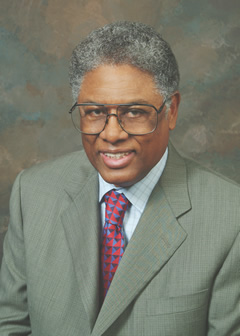
I've taught history for over 20 years, and government and economics as well. Here are two columnists I've enjoyed reading during that time and two of their recent columns that are very interesting and representative of what they have written. Enjoy.
Thomas Sowell


Friday, May 27, 2011

What About Logic and King James Onlyism?

On a fundamentalist blog comment thread, someone wrote this:

On a side note, I am curious about the "logic" of taking "logic" lessons from anyone in the KJV only camp. Seems a little "illogical" don't you think?

Nobody answered his question, so I will. A King James Only position is the only logical position to take on the English Bible today. Yes. Any other position is illogical. Of course, I'll explain. I decided to write on this, because it is a thought I had not explored on this issue on my blog. I thought the irony here was too good to pass up. I spent some time of thought while doing other things trying to find a way for some other position to be logical, but I couldn't, which is the irony here.

First, one observation about the comment. There is no "KJV only camp." There are KJV only Presbyterians, KJV only Charismatics, KJV only Baptists, KJV only fundamentalists, KJV only Calvinists, KJV only revivalists, KJV only independents, KJV only denominationalists, and then numbers of different type of KJV onlyists. I think that many fundamentalists and evangelicals do think there is a KJV only camp, that somehow you can lump all KJV onlyists into its own separate group, as if this is the defining theological point of those who are KJV only. Not even close. KJV only is a position, but it is not a camp or a group.

I'm pretty sure that the guy who wrote the comment thought he was making a funny, providing some entertainment to the cronies, which is a common type of attitude that I've seen for multiple version people. Mockery is one of their favorite tactics or arguments. But in this case, he really is gnawing on his own foot as he tries to ridicule as a form of criticism.

Before I go to the logic here, I took logic in college and then taught it twice. That does not make me some expert, but it does mean that I know what I'm talking about. Now to the analysis.

Consider the following statement.

One set of words in one set order is the Bible.

This is to say that God inspired only one Bible. God did not inspire two Bibles. And yes, I recognize that the one Bible was Hebrew and Greek, not English. The English Bible is a translation (I say that for a preemptive strike against doofus comments) from the Hebrew and Greek (KJVO people know that!). It is also to say that Scripture is Words, the very ones that God inspired. Different Words in a different order are not the same Words in the same order. When the order is changed from what God inspired, it is not what God inspired.

Let me give you an example from the English that we can all understand.

Sentence 1.

In the morning, the boy ran to the park.

Sentence 2.

Early a boy ran to the playground.

Those two sentences are similar, but they are not the same. You may say that 'you know that.' Good. Because that's how simple this all is. Again, to help you understand, let's say that God inspired "sentence 1." Sentence 2 could not be God's inspired Word no matter how close it is to the original. Inspiration relates to the words, not to concepts or ideas.

Now consider the next statement.

Only one book is one set of words in one set order.

Two different books will have a different set of words and in a different set order. They cannot be the same. I think you understand.

OK. So let's put this together now into a logical syllogism with the two statements.

One set of words in one set order is the Bible.
Only one book is one set of words in one set order.
Therefore, the Bible is only one book.

If you put letters in, it reads like this:

All M is P,
All S is M,
Therefore, All S is P.

Both premise must be true for the conclusion to be true. Is the Bible one set of words in one set order? Yes. Is one set of words in one set order only one book? Yes. So the conclusion is true. Let's put it to the test.

All men are mortal.
All Greeks are men.
Therefore, all Greeks are mortal.

So multiple version people are saying that KJVO is illogical. A big laugh about that one too. I mean, it's so obvious. Right? Wrong. All KJVO people are saying is that the Bible is one book, not two. It has to be one book. So a multiple book idea is not true. That's mainly what this is all about. Multiple version people require people to believe that different words in a different order are still the same book. And we have to believe that, why?

So who is illogical?

Wednesday, May 25, 2011

Evangelical or Fundamentalist Pharisaism part two

The Pharisees were religious liars. We live in a world of lies. Satan is a liar and he also happens to be the prince of this world, so we can expect there to be lies everywhere. That's why none of us can be naive. Recently we watched the Harold Camping fiasco in which he told dangerous, damaging, and destructive religious lies about people's future. They trusted him and made bad decisions based on his false information. Most of the world is stuck in some kind of lie.

The United States right now is opting to believe a lie about its future, about most of their entitlement programs. I believe that the banks want Americans to think that they are better off than they really are, when half or more of its home-owners still may owe more than their houses are worth. Banks don't want people to think about that. And the housing market should be flooded with foreclosures, but that would kill the banks. They are hoping the economy will get better so that people will get jobs and be able to pay on their mortgages again. But the President of the U.S. wants to be reelected and he wants you to think that the country is fine, and the mainstream media is invested in him and they also want Americans to believe he's doing a great job. Lies are everywhere.

There is no more damaging lie, however, than a religious lie. It relates to eternity. And the Pharisees were holding together a house of cards with as many well-placed lies as they could manage in order to keep fooling their constituents. Unfortunately, we are living with similar kind of conditions in evangelicalism and fundamentalism today.

The Bible is the truth. God's Word is truth. God tells the truth. But people can take what God said and tweak it and spin it into something that it isn't. Churches and religious organizations are trying to keep their supporters just like the banks are attempting to keep receiving mortgage payments. They want to succeed and they know that people might say they want to hear the truth, but they actually like some mixture of truth and error that is more palatable to them.

For instance, the law wasn't altogether acceptable to a Jew. It was too strict. It was too harsh. It was too onerous. It was too weighty. They thought they had to be righteous by their own deeds, but they couldn't accomplish that. It was impossible. So they altered the law into something they could keep on their own. It was a new law system that wasn't even the law. They were told religious lies that would make them think they would be fine with that.

Evangelicalism and fundamentalism does the same thing today. They do it the same way as the Pharisees did. They minimize and reduce God's standards, His will, to something that people are more comfortable with. God's will is complete sacrifice, but evangelicalism and fundamentalism is something far short of that. Evangelicalism and fundamentalism want to give all the supposed benefits of Scriptural obedience without the responsibilities. This is not a dependence upon the grace of God. It is a form of legalism, a left-wing kind of legalism, that makes grace a garbage can that receives worldly lust.

Today so much of professing Christianity is about convenience and feelings and a warm experience, and this is fostered by evangelicalism and fundamentalism, because it is what people want Christianity to be. And so evangelicalism and fundamentalism has understood what people like and have altered Christianity to different degrees to make it more palatable to people. It is a strategy. But it is a lie too. God still wants a certain behavior. He still wants certain lifestyle. He still wants a certain liberty. But those are inconvenient to people, so evangelicalism and fundamentalism has made those practices non-essentials. You don't have to believe or practice those things in order to be a good Christian. As a matter of fact, if you do them or say that they are necessary, when they are "non-essentials," you are actually a worse Christian. The Pharisees of Jesus' day used the same type of strategy in order to sell their religion to the people.

However, when we stand before God, we will give an account for what the Bible actually does say, not the watered down, compromised version that is offered by evangelicalism and fundamentalism. God is not winking at the violations of what He mandated in His Word, of the applications of His truths in the Bible. Those lies might be acceptable now, but they will be manifest later for the lies that they are.

What is as offensive as anything about the lies is that today they are part of what evangelicalism and fundamentalism uses to argue for their own success. Whatever popularity they still have in a world that is becoming increasingly disinterested in anything of the truth of the Bible very often comes from the success of evangelical and fundamentalist compromise. The constituents don't have to do everything the Bible says, and it is called grace. And if someone points that out, he is marginalized, called a legalist, or is labeled as someone who doesn't understand the grace of God. This defense of themselves, which is part of the lie, gives people a basis to keep believing and living those lies that they do. And it is enough to cobble together a coalition that keeps evangelicalism and fundamentalism afloat.

So not only do lies buttress the evangelical and fundamentalist world, but they are called special and important truths that are a vital part of Christianity. Everyone is better off because of them. Those who do not follow these compromises of the truth are actually the Pharisees and the liars. Know this. These lies are not acceptable to God. They are wood, hay, and stubble, posing as gold, silver, and precious stones. And in the end, they will burn. You don't want to believe lies and base your eternity upon them, including evangelical and fundamentalist ones.

What occurred when anyone criticized the Pharisees, exposing their fraudulence? They got treated in an unscriptural manner. There was no Biblical, Godly way that they handled their critics. In the case of Jesus, they wanted to kill, just to shut Him up. I've seen the same type of behavior from evangelical and fundamentalist Pharisees as well. You point out a particular disobedience that they see as a non-essential, actually something they don't like to do and they don't want to hear about, and they mock and marginalize. In the online world, they don't let you comment, shut you out, and then spend comment after comment ridiculing you, lying about you, slandering you, and offering the cold shoulder treatment. This is what Pharisees do to protect their lie.

Monday, May 23, 2011

Evangelical or Fundamentalist Pharisaism

Evangelicals like to label who is a Pharisee. Not them, of course. Usually it's someone who has different standards than they do. I ask you to consider the following with this regard.

In Luke 11, Jesus was invited to lunch with a Pharisee. He went and sat himself down without the ceremonial hand-washing required by Pharisaical tradition. When in his mind the Pharisee judged Jesus wrong, the Lord could read the thought and then rebuked it (vv. 39-44). He made several points, ending with three "woes," that is, three pronouncements of God's judgment upon this Pharisee and all the Pharisees in general. So Jesus was confronting Pharisaism for sure with this first of the woes in v. 42:

But woe unto you, Pharisees! for ye tithe mint and rue and all manner of herbs, and pass over judgment and the love of God: these ought ye to have done, and not to leave the other undone.

If you read this whole section, you will find an example of Jesus' dealing with a religious person. If this was a contemporary situation, and they didn't know it was Jesus, almost every evangelical and many fundamentalists would condemn Jesus' technique or strategy. It isn't seeker sensitive or "loving" or even smart. He was turning off His audience and losing an opportunity, according to a typical evaluation from those sources. As interesting as that observation might be, I am thinking about something different from that in consideration of a point evangelicals and many fundamentalists attempt to draw out from v. 42.

Evangelicals, including conservative ones, say, based upon this verse and others like it from other contexts, that Jesus is addressing a particular issue of the Pharisees. They say that the Pharisees emphasized secondary doctrines over primary ones, or tertiary doctrines over major ones. This specific issue is ironically a major one for both evangelicals and fundamentalists, so they "find it" here. And then evangelicals will point to certain fundamentalists and say that they are Pharisees because they make major doctrines out of minor ones or essentials out of non-essentials.

Problem. Jesus isn't talking about primary versus secondary doctrines. That isn't His point at all. Nowhere does the Bible say something like 'feel free to disobey the minor teachings as long as you keep those major ones.' It doesn't. It teaches just the opposite over and over.

What the Pharisees were doing, these legalists, was obeying the easier requirements of the law, while disregarding the difficult or even impossible ones. It was easy to tithe of the little herbs and vegetables and spices that you harvested from your garden. It could also be very impressive. Someone might say, "Wow, those Pharisees sure do pay attention to details! They even tithe of the smallest bits of produce!" And those could be accomplished in the flesh.

On the other hand, right judgment of others and the love of God were impossible in the flesh. And they didn't fit into the Pharisees' agenda. The Pharisees weren't about God or others---they were about themselves.

Rather than admit that they were failures at keeping God's law and repent, they did what Pharisees do, that is, reduce or minimalize the law to something they could keep. That's why one of the Pharisees favorite questions was: what is the greatest of God's commandments? If they could reduce the law to a few they could keep, then they could be righteous through their own ability or in their own strength.

A natural reduction was for the Pharisees to opt out of the hard, weighty, or difficult parts of God's law and then emphasize the parts that they could keep on their own, the aspects of the law that were convenient for them. So instead of being the major versus the minor, this was the difficult or impossible versus the easy or convenient. If a Pharisee could get maximum credit for minimum effort, that would be the ideal choice.

The text of Luke 11:42 backs up the above understanding. Jesus didn't tell the Pharisees to stop tithing. He said "do tithe." However, don't tithe and then leave judgment and love undone. Why would they do something they were supposed to do, tithe of their miniature garden produce, and then not do other laws they were also supposed to do, do judgment and love God? The latter were more difficult, really impossible. The former were easy and convenient. The former would give them credit for obeying the law while they were busy disregarding other parts of the law, the ones that they didn't want to do. The latter were only possible by the grace of God, which the Pharisees did not have.

Evangelicals and even fundamentalists read into, that is, eisegete Luke 11:42 by saying that it regards essentials versus non-essentials. That way they can choose what the essentials and non-essentials are. And what I've noticed that they happen to choose as non-essentials are the ones that they don't like to do, because they are more difficult or more embarrassing in the world. They don't want to clash with the world. That hurts church growth. That doesn't feel good. And so those activities become the non-essentials.

This fictional essential/non-essential, major/minor, primary/secondary doctrine also is a major factor in keeping the fake unity that allows evangelicalism and fundamentalism to be big. Small again is embarrassing and unsuccessful. Big gets attention. Big looks like a winner. Big is popular. Big can even look like "God's hand is upon you." A coalition can be cobbled together when doctrine is reduced to a lower common denominator. And so evangelicalism and fundamentalism chooses what the essentials of unity are going to be, and that list is getting smaller and smaller. Not based upon biblical exegesis, but based upon some popular evangelical or fundamentalist norm. And then this is called unity. This is also what you will hear evangelicals and fundamentalists arguing about, debating, what things that the Bible teaches that someone should expect, since it isn't going to be everything that Scripture says.

The Pharisees practiced their legalism by reducing doctrine and practice. Evangelicals and fundamentalists do the same. And they twist or pervert verses like this one in order to get it done. That's also what Pharisees would do. They would read into the Old Testament what they wanted it to say in order to believe and practice like they wanted to. Evangelicals and fundamentalists do the same. And in so doing evangelicals and fundamentalists pervert the grace of God. God's grace enables us to practice the convenient and the difficult of God's Word. It's all by God's grace. If it is by grace, it is possible. If it is by your flesh, then you must reduce and minimalize, and that's exactly what almost all evangelicals and most fundamentalists call upon you to do.

Now the evangelicals and the fundamentalists call it grace. They call this reduction and minimalization grace. They say they have a superior kind of freedom that is God's grace. However, we don't have grace to disobey Scripture. It really isn't grace at all. It is a container of bondage with a grace label on it. People suck up what's in the container and think they have grace. They are fooled all over evangelicalism and fundamentalism into this kind of thinking just like Israel was by the Pharisees.

So evangelicals and fundamentalists create a non-existent essential and non-essential doctrine. This is a Pharisaic type of practice---man-made doctrines equated as those of God. They corrupt God's grace, by making it a garbage can into which you can pour all of your disobedience to the inconvenient requirements of God. They twist biblical unity. And they encourage disobedience to God's Word. Reader, beware of the leaven of today's evangelical and fundamentalist Pharisees.
Saturday, May 21, 2011

Family Radio: Non Prophet, But Plenty of Profit

We can't believe everything we see or hear from the mainstream news media, but CBS reported that in 2002, Harold Camping and Family Radio were worth $22,695,306. This non-profit organization, in 2008 was now worth $117,634,384. And then you read that they spent only one million dollars on advertising for the end of the world on May 21, 2011. If you have 117 million dollars, how much of that are you going to need after you are gone on May 21? None. If you have 117 million dollars, how do you spend only one million dollars to announce that the world is going to end? If the world is going to end and you know the very day, then you spend 117 million of your 117 million. If you spend only one million dollars, you didn't believe the world was going to end anyway. Where your treasure is, there will your heart be also. I contend that Harold Camping himself didn't believe the world would end. How does he keep all that money if he knows the day he is leaving this world for the next?

During channel surfing, I've listened to Family Radio and heard their all day fundraising efforts. I think it would have been good for its listeners to know that the money would just be added to its overall net profit. And whoever was giving that money should have known that of the 117 million dollars in reserve, only 1 million dollars was going to be used for what anyone would have used it who knew the last day for earth was May 21, 2011. And doesn't Camping's no-church belief work conveniently for his fundraising? Money, of course, should not be "wasted" on his local church, but saved for the "ministry" of Family Radio.

Wednesday, May 18, 2011

Use Camping's Prediction as a Great Evangelistic Opportunity

My Baptist brethren, Harold Camping's prediction of the end of the world is a great opportunity to evangelize his followers, many of whom are unconverted. If brethren in Baptist churches all over the country go to events where his people will be in the next couple of days, when Sunday rolls around and Mr. Camping has been proven (again) to be a false prophet, there will be a lot of disappointed people who will be looking for answers. We might be able to see some of the poor deceived people following Mr. Camping converted and baptized into solid churches after their prophet proves himself false again. You can typically find out what is going on with one's local radio station without too much work on the Internet; find out what Camping's people are doing in your area, go preach to them, and, within a few days, when their entire theological system is destroyed, they will be more likely to listen then perhaps they will be as a group at any other time for years (if the Lord tarries, as we certainly do recognize that He can come at any moment.)

-TDR

Monday, May 16, 2011

Transcendence, Immanence, and Culture part one

Everyone in the realm of biblical thinking affirms both the transcendence and immanence of God. Both are true. The latter, however, is dependent on the former. For one, God does not condescend without being both separate and distinct from His creation. The place from which He descends is higher and outside the realm of His creation or else He wouldn't be condescending, a place that is different than the world that He created and that hasn't been ruined by sin. His separateness is the hope of man's salvation. He offers man rescue from his place of wickedness and discord to God's of righteousness and order. There is no immanence without transcendence.

God created man. Everything started with and will end with God. God is the source of all meaning because everything begins and finishes with God. We derive our definitions from Him. We may believe a meaning that differs from God, but that doesn't conclude that meaning as correct. For instance, we may believe that God is a jar of peanut butter, but that doesn't make it so. Truth and meaning are objective because God is unaffected by His creation. He is the "I am." He is not becoming anything. Nothing occurs to or changes Him. He isn't adjusting His character to outside forces to Himself. This is a truth of His Word in James 1:17, that is, with Him "is no variableness, neither shadow of turning." Meaning relates to God, not God to meaning. God is not subject to either the limitations or the distortions of life.

Our understanding of God's immanence comes from His transcendence. We see because God revealed. Light came from Him. Man didn't come to understand. He was enabled by God's grace, which comes from other than where he is. God was there before the foundations of the world and the world came into existence only by and through Him. Transcendent thought considers everything in relations to God.

Perfection lies outside of man. For man to be perfect, perfection must come from the realm of God. God sent the perfect God man. That perfection must needs come from outside of man for man to be perfect.

For immanence to be protected, transcendence must be prioritized. God must be God. God existed before and continues apart from His creation. The One who comes must be the One. And we cannot go to Him without His coming to us. He must come from there to come to here. And there is one and only One that is there. Only a God powerful enough to create this world could save it from itself.

God is different than this world. Keeping Him apart in thought is the only sure defense against false experience and the allure of culture. Immanence must remain tethered to transcendence or corrupt the right conception of God. A correct understanding of what God created comes from a true understanding of Who God is. God must remain separate in thought from what He created for His character and will to define the substance of every day life. Without God continuing apart from what He created, there is no place to appeal as authority. The meaning of life is diminished to opinion and societal norm. Order disintegrates to lawlessness and finally totalitarian power.

Of course, when transcendence does not reign in thought, all is relative. Man only discovers and meaning is at best shallow and in reality futile---no revelation, no true or false, and, therefore, no right or wrong. Without a God that is there, separate from us, we are cut off from anything greater than what psychology or philosophy has to offer. We are never lifted above ourselves. No thing is superior to another. Bach is no better than Bon Jovi, lawn gnomes no less significant than Michelangelo, and Milton or Wordsworth of no greater value than Eminem or LL Cool J.

Friday, May 13, 2011

Assortment

First, tomorrow night (May 14, Saturday) at 6:30pm the Young People's Symphony Orchestra, including two of my daughters on violin, will be joined by the renowned mezzo-soprano Frederica von Stade in Berkeley, California. You can purchase tickets here. Among others, you will hear this.

************************

Second, P90x. Day 60 was yesterday. The first three weeks are the same. Then a rest week (it isn't, because two of the days are what I consider the hardest workout, Core Synergistics). The second three weeks are different than the first three weeks. All of it is brutal, very intense. Then another rest week, which is the same as the first one of those. Now we are in a four week session that interchanges every week the workout from the first three weeks and then the second section of three weeks. P90x calls this muscle confusion. There are 12 overall workouts, none any shorter than an hour. Every strength workout is joined by 16 minutes of ab ripper X.

P90x works muscles and body parts that you wouldn't get from a normal workout, especially your core. It concentrates on the core, which is an important, but often ignored part of the body. Certain workouts get easier, but others are always difficult.

What are the results? Your body will change. I started at about 238 pounds and am now at about 224. I'll likely end somewhere around 215-218 at this pace. I'm working out with two other guys and it is doing good stuff for them. It isn't a big weight loss plan. I'm not doing the diet, but I am cutting down a little on the intake. Everything will firm up and shape up. I'll let you know when it gets to the end.

**************************

Paul Ryan refutes President Obama's criticism of his budget plan, exposing the demagoguery. And on the subject of demagoguery, Charles Krauthammer points out some more in the President's recent endeavor with Hispanics in Texas. We'll see if it works.