Sunday, October 31, 2021

Does Lordship Salvation Proceed from Calvinism Like Many Say?

I believe what is termed, "Lordship salvation," and don't believe there is any other kind.  I've read articles meant to expose Lordship salvation as false, that say that it was a false version of salvation that proceeded from 16th century Calvinism in its form of 17th century Post-Reformation Puritanism, which resulted in the Westminster Confession of Faith.  When I think of the five points of TULIP, I don't get the connection.  Lordship salvation is what I read in the Bible.  Before I dig into that, I want to clarify some points.

No one is saved by works.  Scripture not only does not teach salvation by works, but it teaches against salvation by works (Romans 3:20, Galatians 2:16).  The Bible does teach salvation by grace through faith alone (Ephesians 2:8-9).  It is not a grace or a faith like the Mormons, their vital doctrine of salvation found in the Book of Mormon, a man-made, uninspired book, says (2 Nephi 25:23):

For we labor diligently to write, to persuade our children, and also our brethren, to believe in Christ, and to be reconciled to God; for we know that it is by grace that we are saved, after all we can do.

The Bible not only teaches nothing like that statement, but it teaches that if one adds one work to grace, Christ becomes of no effect unto him and he then becomes a debtor to do the whole law (Galatians 5:2-4).

On the other hand, even though salvation comes by believing in Jesus Christ, that means "believing" must be what scripture shows is "believing" and "Jesus Christ" must be who scripture shows is the Jesus Christ someone is to believe in.  These aren't arbitrary, "believing" and "Jesus Christ."  Both must be what scripture teaches.  When I write this, I'm not attempting to be difficult or wanting truly saved people to think they're not saved.  "Believing" and "Jesus Christ" are both simple to understand.  They go wrong when someone adds to or takes away from what the Bible says.

Also, when someone professes to believe in Jesus Christ does that mean he is truly saved?  Is that what scripture teaches about the assurance of salvation?  It doesn't.  The Bible teaches the opposite.  Someone merely professing he believes in Jesus Christ does not mean that he has believed in Jesus Christ.  Just because someone continues to profess faith in Jesus Christ does not mean that he is saved.

The ones that I have read that critique Lordship salvation as Calvinist or Reformed, say that the original Reformers, Calvin and Luther, said faith was only acceptance of the Word of God.  I could agree with faith being acceptance of the Word of God if it really was acceptance of the Word of God, which means that someone truly accepted in a genuine fashion what the Bible said about Jesus Christ.

As a matter of history, Melancthon in the 16th century defined faith with three Latin words in his  Loci Communes Theologici:  Notitia, Assensus, and Fiducia.  Those three in order bring in intellectual, emotional, and volitional.  From that, I would argue that the volitional aspect of faith arose before the 17th century.  Among writers, these three divided into two, notitia and assensus representing the mind and fiducia, the heart, so that genuine faith involved the head and the heart, not just the head.

I'm not going to do this here, but if one were to follow through with a study of faith in all theological literature, one can see that this volitional or heart aspect goes back very far as an understanding of faith.  As an example and before the printing press, Irenaeus in the early 3rd century wrote:

The Law which was given to bondmen formed men's souls by outward corporeal work, for it coerced men by a curse to obey the commandments in order that they might learn to obey God. But the Word, the Logos who frees the soul, and through it the body, teaches a voluntary surrender. 

Clement in the early second century writes:

Called by the will of God in Christ, we can be justified, not by ourselves, not by our own wisdom and piety, but only by faith, by which God has justified all in all ages. But shall we, on this account cease from doing good, and give up charity? No, we shall labor with unwearied zeal as God, who has called us, always works, and rejoices in his works.

This is how men have understood faith not to be mere intellectual assent to facts.

As I always do and as I presented above, I divide the issue into two parts, "believing in" and "Jesus Christ."   "Faith in Christ" is four times, "faith in the Lord Jesus" once, some form of "believe on" Christ, fifteen times, and "believe in" Christ, eleven times.  There are more examples than these, but "believing" must be believing, and we know that some faith does not save (James 2:17-26; John 2:23-24).  It reads as only intellectual, which means something must be added.  It is easy to see that repentance must be something more than just sorrow (2 Corinthian 7:8-11).  If you add intellect and sorrow without volition, you are falling short of believing.

Taking in all the parallel passages, saving faith must include repentance.  One could say that saving repentance must include faith.  Jesus said that if anyone comes unto Him, salvation language, he must deny himself, which means losing his life or his soul (Luke 9:23-25).  Salvation is described as the restoring of the soul (Psalm 23:3) and the converting of the soul (Psalm 19:7).  To be restored or converted, the soul must be relinquished to the Lord.  This is repentance.  Jesus said, I am the way (John 14:6).  Someone relinquishes his own way, if he believes in Jesus Christ.

The second half says, "Lord Jesus Christ."  If someone believes Jesus is the Christ, which is necessary for eternal life (John 20:31), then he believes Jesus is King.  This fits with Jesus' and John the Baptist's preaching to "repent for the kingdom of heaven is at hand."  One could say the meaning of this is "repent because the King is here."  The New Testament presents Jesus as King.  Someone does not believe in Jesus as the Christ, as the King, and remain in rebellion against Him.  He relinquishes His will.  This can be proven over and over in the New Testament.

Just as an example, one should read the parable taught in Luke 20:1-19.  It's obvious, Jesus the Son was sent to people, having authority over them, and they were to receive His authority and ownership, Lordship, if they believed in Him.  They didn't.  They killed him, so they were in big trouble.  This kind of teaching is all over the New Testament.  I understand that the non-Lordship teaching would be more popular, since the biggest problem men have is that they are walking after their own lusts and they don't want someone as a Boss (2 Peter 3:1-4).

Everything that I've written about believing in Jesus Christ does not require being a Calvinist or Reformed.  I haven't read anything that makes that connection.  It's an assertion without proof.  Just because Calvinists did believe that doesn't mean it originated with them.  It is what the Bible teaches.

When one reads the early Baptist confession, the Schleitheim Confession (1527), written by Michael Sattler, not a Protestant confession, he reads something that doesn't give a full confession of faith or explanation of the Baptist doctrine.  It reveals the distinctions between the Baptists and those not Baptists, who claim salvation by faith.  It doesn't show disagreement on what "faith in Christ" is from what others were saying.  One of the few statements in the Confession, however, is the following:

Baptism shall be given to all those who have learned repentance and amendment of life, and who believe truly that their sins are taken away by Christ, and to all those who walk in the resurrection of Jesus Christ, and wish to be buried with Him in death, so that they may be resurrected with Him, and to all those who with this significance request it [baptism] of us and demand it for themselves.

This is how these men viewed those who believed in Jesus Christ.  They were not Calvinists.  Repentance and true faith in Christ, which includes Lordship, did not arise from Calvinism.

Tuesday, October 26, 2021

Which Is True? Restoration, Reformation, or Perpetuity?

Two experiences dovetailed today for me to write this post.  The first, I was working out on an elliptical machine and watching a documentary on Martin Luther.  Does the Reformation represent the truth?  Is the true church a reformed one?

The second, I took my dad to a podiatrist in Layton, Utah.  As a diabetic, he goes in for his feet every three to six months.   My conversation with the LDS doctor took us into the Baptists.  In addition to a short gospel exposition, to him I explained Baptists and the perpetuity of the truth and a true church.  Rather than perpetuity and reformation, the Mormons believe in restoration of a true church gone apostate.

I see six possible historic positions on the truth.  One, we never ever had it.  Two, we received it, lost it, and have never found it since.  Three, it has been corrupted to the degree that we have a portion of it, so it needs reformation, but it has never been reformed.  Four, it was corrupted and now reformed (but not likely to its original state).  Five, it was lost and has since been restored completely.  Six, it was never lost or corrupted.  Those six positions find themselves in restoration, reformation, or perpetuity.  Someone could add total apostasy to the three to take in the six.

Historic positions on the truth relate also to the church.  The preservation of the truth pertains to the preservation of the church.  God gave the truth to the church to preserve (1 Timothy 3:15).  Applying the same views to the church, one, did the true church end?  If it ended, was it restored?  If the church became corrupted, submerging it in various degrees of darkness, was it reformed?  Or, was the church never lost, the truth never lost, but both were preserved?  These viewpoints of truth and of the church can't all be true.  Only one of them can be true, because each of the three or four contradict the others.

Another important facet to this discussion or question is, how do we know which of these four is true?  Only one of them can be true, but how do we know which one?  Philosophy of history revolves around the question, what happened?  Many other questions, however, arise, important of which is whether a person can report on historical events accurately with his personal interpretation.  In this discussion, this is the crux of the issue.  From a biblical perspective, God didn't promise to preserve history.  History can be and is slanted by those recounting.

If perpetuity of the truth and the church is true, that truth and the church were never lost, how do we know?  What is the proof?  Most historical evidence is on the side of corruption and reformation.  Is there proof for perpetuity?

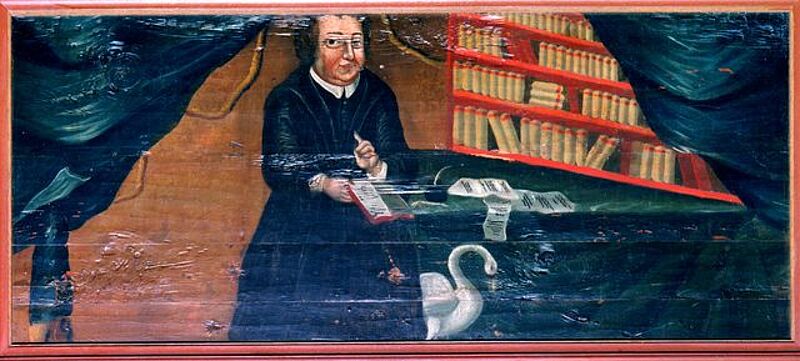
As I listened to the introduction in the Martin Luther documentary, the makers presented a very dark world out of which the reformation began.  That segment began with an illustration of the painting by the Dutchman, Hieronymus Bosch, The Garden of Earthly Delights.  The producers posited a world as Bosch did.  The church was corrupt with few exceptions, John Wycliffe and John Hus.  Hus apparently means "goose" in Bohemian.  Hus is reported to have said while being attached to the stake for burning, "You can kill the goose, but one day soon a swan will come that no one will be able to silence," and Luther came a hundred years later.  Luther's pulpit had a swan engraved or painted on it, asserting himself the fulfillment of Hus's prophecy.

With the reformation view of history, Luther becomes important.  He becomes the vessel of the Reformation, it's veracity attached to him.  Was that true?  Luther retained many Roman Catholic doctrines, including a state church.  He was better than the Catholics, no doubt.  Based on his own writing, I don't think Luther was converted.  A reformation viewpoint embraces Luther and then adapts him to provide the proof.

This brings us to the philosophy of history.  What is true?  We know the Bible is true.  We know what Jesus said was true.  The reformed view isn't much different than that of the restorationist, whichever ones that might be.  Jesus and the Bible teach perpetuity.  As I watch a Luther documentary, it is easy to see their history as a matter of personal interpretation through a convoluted lens.

The Mormon podiatrist asked me when the Baptists started.  I didn't provide him a hint to ask that question.  It was important enough for him on his own.  How did I answer?  I said that Baptists started with Christ, and I added, "Of course I would say that, right?"  I said, there have always been true churches separate from the state church.  That's what Jesus prophesied and He couldn't be wrong (Matthew 16:18-19). 

I hear the reformed say, "The Reformed doctrine of justification," as if the doctrine of justification had been lost.  I have often asked men, "Do you believe the truth was preserved through Roman Catholicism?"  I have noticed that all of them have a difficult time answering that.  It's easy to see why.  Roman Catholicism was an apostate institution that had departed from the faith, when the Reformation started.  The Reformed or Protestants trace themselves through Roman Catholicism, a viewpoint incompatible with a scriptural position on the truth and the church.

A perpetuity view starts with scripture and then gives the most complete historical evidence that corresponds to what the Bible says.  In every century since Christ and the founding of the church, churches exist separate from the state church that embrace scripture as authority.  With a scriptural presupposition of perpetuity enough historical evidence exists to support that viewpoint.  Many historians vouch for this.

Cardinal Hosius wrote in the 16th century that the Anabaptists have been persecuted by the state church for 1200 years:

For if so be, that as every man is most ready to suffer death for the faith of his sect, so his faith should be judged most perfect and most sure, there shall be no faith more certain and true, than is the Anabaptists', seeing there be none now, or have been before time for the space of these thousand and two hundred years, who have been more cruelly punished, or that have more stoutly, steadfastly, cheerfully taken their punishment, yea or have offered themselves of their own accord to death, were it never so terrible and grievous.

The famed Quaker commentator, Robert Barclay, said (The Inner Life of the Societies of the Commonwealth, London, 1876, pp. 11-12):

We shall afterwards show the rise of the Anabaptists took place prior to the Reformation of the Church of England, and there are also reasons for believing that on the Continent of Europe small hidden Christian societies, who have held many of the opinions of the Anabaptists, have existed from the times of the apostles. In the sense of the direct transmission of Divine Truth, and the true nature of spiritual religion, it seems probable that these churches have a lineage or succession more ancient than that of the Roman Church.

Annaeus Ypeij (1760–1836) and Isaac Johannes Dermout (1777–1867), Dutch Reformed theologians and historians, in their Geschiedenis der Nederlandsche Hervormde Kerk wrote:

We have now seen that the Baptists, who were formerly called Anabaptists, and in later times, Mennonites, were the original Waldenses, and who, long in the history of the church, received the honor of that origin. On this account the Baptists may be considered as the only Christian community which has stood since the apostles, and, as a Christian society, has preserved pure the doctrine of the gospel through all ages. The perfectly correct, external and internal economy of the Baptist denomination tends to confirm the truth disputed by the Romish Church, that the Reformation, brought about in the sixteenth century, was in the highest degree necessary; and, at the same time, goes to refute the erroneous notion of the Catholics, that their communion is the most ancient.

I include these only as samples.  There are many more quotes that back the hypothesis that assemblies existed separate from Roman Catholicism, which believed and practiced the Bible.  They long predate the Reformation, substantiating a perpetuity viewpoint.

The modernism of the nineteenth century brought a solely empirical basis for truth.  The nature of knowledge brought the necessity of a rational justification for faith.  Traditional beliefs that proceeded from scripture alone were questioned and criticized.  The empiricist claimed knowledge through the senses alone.  The only reasonable view of the world comes by scientific discovery.  Sufficient evidence for perpetuity could be questioned next to the massive documentation of Roman Catholicism.  This clashes with the doctrine of scripture.

Faith is the basis of pleasing God and faith comes by hearing the Word of God.  Faith isn't contradictory to reason, but it is superior to reason.  I like to say that faith bypasses our lying eyes.  Revelation exceeds, transcends, or eclipses discovery.

At the same time, perpetuity is reasonable.  Scripture is reasonable.  This fits Romans 12:1, "reasonable" (logikos).  Enough history exists either direct or indirect to corroborate the scriptural presupposition of perpetuity.  Saying that the truth was lost and the church ceased as an institution is not reasonable.  It's like saying that the world got here by accident.

From reading this, you get the conclusion.  Restoration is false.  Reformation is false.  Perpetuity is true.  What does that mean for authority, the truth, the church?  It has repercussions that are worth exploring.  If you joined something Protestant, Reformed, or Restorationist, you're in something false.  What does that leave you?  Pleasing God requires living by faith, which means obeying scripture.  This is why I believe in perpetuity and I'm a Baptist.

Sunday, October 24, 2021

The Meaning of "Done" and the Work of Christ

I didn't hear language until recently both in preaching and in reading, that there are two religions, one "do" and the other "done."  It's a nice turn of phrase and can be helpful for someone who thinks salvation is by works.  A popular leader in what I'm going to label, "new revivalism," like the title "new Calvinism," wrote a book called, "Done."   In a sense, depending upon an explanation, this "done" versus "do" aphorism is true.  It can also be false though, and dangerous.  What I read, very often it is.  In many cases, the ones writing "done" and not "do" are wrong, mainly in their watery, gumby definition of "done."  The ambiguity provides for doctrinal perversion.

It makes good preaching to turn to the words of Jesus on the cross, "It is finished," tetelestai, perfect passive, the work of salvation done by Christ on the cross.  Some Christian leaders, many now, as it's very popular, say that it's done, so when you sin, you just preach the gospel to yourself, so you don't feel burdened down by that sinning.  Tetelestai is perfect passive, not to get super Greeky with you, but it doesn't mean, "done," per se as it would with the aorist tense, completed action.  With the perfect, the work is done, but the results are ongoing.  Jesus works, but His work doesn't stop working.

Paul wrote in Philippians 2:13, "it is God which worketh in you both to will and to do of his good pleasure."  He's not done working in you.  It is finished, but the results are ongoing.  How do you know He's done?  Jesus said, "Not every one that saith unto me, Lord, Lord, shall enter into the kingdom of heaven; but he that doeth the will of my Father which is in heaven" (Matthew7:21).  "He that doeth."  That's not "done;" that's "do," "doeth."  For the one who is really "done," he will "do."

The work that Jesus does is transformative to the actual life, not some kind of fanciful, chimerical life, where you don't live it.   Some of the "done" people say, Jesus lives it, and you just claim what He did as if it was you.  Some of you readers may say that you're not doing that.  You are when you lump sanctification with justification.  How you know you're saved is that He keeps saving you.  Evidence.  It shows up.

Part of why the righteousness Jesus lived doesn't show up in the life of the "done ones" is that they did not repent, except again a kind of redefined, dumbed down repentance.  This is changing your mind about not trusting in what Jesus did.  You repent of depending on your self.  This is the kind of so-called repentance of the Pharisees, just dumbing down righteousness, what Paul said was establishing your own righteousness and not submitting unto the righteousness of God (Romans 10:1-4).

Salvation is "done," don't get me wrong.  It's a matter of what "done" means. What is done?  When someone is saved, he is changed, a new creature (2 Cor 5:17).  Sin doesn't have dominion over him any more (Roman 6:14).  The life that someone has is not just the quantity of the life, but the quality of the life.  The epistle of 1 John says that it is the life of God that is in someone (1 John 1:1,2, 5:11), where the believer becomes a partaker of the Divine nature (2 Peter 1:4).

Very often, if not most of the time, the modern purveyors of "done" mean, even if it is only for practical purposes, that salvation now is all set regardless if a person keeps on sinning.  If there is any hint that his life is going to change, then it's "do" and not "done."  He becomes cemented in sinning, because he can do it without any repercussions.

The apparent alternative to "done" is someone who gets salvation through the death of Christ after trying to be a good person and live a righteous life.  That isn't it.  Salvation isn't done until the believer is glorified, and if it really is done, Christ is in Him and will continue saving him.  Ironically, when the presence of God isn't in that person's life to transform him, he is just doing, still, and without being saved, except he thinks he's saved in a dangerous deceptive way.

Tuesday, October 19, 2021

Genesis 2 and 3, The Tree of the Knowledge of Good and Evil, Postmodernism, and Critical Theory

People in general don't want to be told what to do.  This is the sin nature of mankind, a cursed rebellion passed down from Adam.  So people won't have to do what they are told, they disparage the credibility of the authority.  God is attacked in diverse manners so He won't get in the way of what someone wants to do.

The premoderns, even if some did not view themselves or the world correctly, related everything to God.  Truth was objective.  It was known either by natural or special revelation of God.  If God said it, it was true.  It didn't matter what their opinion was.  Many invented various means to deal with how they might contradict that, but God remained God.

Modernism arose and said revelation wasn't suitable for knowledge.   To be knowledge it had to be tested by scientific evidence, man's observations, consequently elevating man above God.  Man could now do what he wanted because he had changed the standard for knowledge.  Faith for sure wasn't good enough.   With modernism, faith might make you feel good, but something had to be "proven" in naturalistic fashion to say you know it.   The result was modernism trampled the twentieth century, producing devastation, therefore, unsuccessful with its so-called knowledge.

Premoderns had an objective basis for knowledge, revelation from God.  Moderns too, even if it wasn't valid, had human reasoning as an objective basis.  Still today, many depend on what has been termed, "empirical proof."  Postmoderns haven't believed or liked either scripture or empiricism and it relates to authority, whether God or government or parents, or whatever.  No one should be able to tell somebody else what to do.  Modernism failed.  Look at the American Indians and institutional bias, bigotry, and injustice.  It's all just constructed by power and language anyway.  I should be able to do what I want.  I know better.  I have my own knowledge of good and evil.  You tell me what to do for no good reason.

Critical theory proceeds from postmodernism, but is ironically constructed to sound like modernism. It's not a theory.  Theory is by definition supposed to be rational and associated with observations backed by data.  Critical theory criticizes, but it isn't a theory, rather a desire.  People desire to do what they want and don't want to be told what to do, so they deconstruct the language to serve their desires and change the outcome.  In the United States especially, they criticize white men, those who constructed language and power for their own advantage.  They kept down women, all the other races, and sexual preferences.

The postmodernism behind critical theory procures its knowledge with total subjectivity.  Those proficient in theory based on their own divination know what's good and evil.  Having this secret knowledge is being woke.  They have eaten of the tree.  White men are evil.  The patriarchy is evil.  Anyone contesting gender fluidity and trangenderism is evil.

Epistemology is a field of study that explores and judges how we know what we know and whether we really know it, that it is in fact knowledge.  What is a sufficient source of knowledge?  You can say you know, but do you really know?  The Bible uses the term "know" and "knowledge" a lot.  Biblical knowledge is certain, because it comes from God.  You do know what God says, when you learn it.  You can't say the same thing about what you experience or feel.

In Genesis 2 (vv. 9, 17), what was the tree of the knowledge of good and evil?  In the same context, Genesis 3:5-7 say:

 5 For God doth know that in the day ye eat thereof, then your eyes shall be opened, and ye shall be as gods,, knowing good and evil. 6 And when the woman saw that the tree was good for food, and that it was pleasant to the eyes, and a tree to be desired to make one wise, she took of the fruit thereof, and did eat, and gave also unto her husband with her; and he did eat. 7 And the eyes of them both were opened, and they knew that they were naked; and they sewed fig leaves together, and made themselves aprons.

If Adam and Eve depended on what God knew, they would not have eaten of the forbidden tree.  By eating of it, they trusted their own knowledge.  The tree wasn't the tree of the knowledge of good.  God provided that knowledge.  Just listen to Him.  By eating of the tree, now someone also had the knowledge of evil.  The knowledge of evil, what someone might call, carnal knowledge, reminds me of three verses in the New Testament.

1 Corinthians 5:1, It is reported commonly that there is fornication among you, and such fornication as is not so much as named among the Gentiles, that one should have his father's wife.

Ephesians 5:3, But fornication, and all uncleanness, or covetousness, let it not be once named among you, as becometh saints.

Romans 16:19, For your obedience is come abroad unto all men. I am glad therefore on your behalf: but yet I would have you wise unto that which is good, and simple concerning evil.

God forbids or warns against the increase of the knowledge of evil.  Don't become curious with evil. That last verse of the three is especially enlightening.  Adam and Eve, however, upon eating were no longer simple concerning evil.  The knowledge of evil isn't especially helpful and we don't need any other basis for the knowledge of good other than God.  God is good.  All goodness comes from above (James 1:17).

Critical theory posits a special knowledge, like that of the gnostic.  It is an invention, an impression, or a desire.  What the theorist knows now is evil, because he's stopped listening to God as a basis for what he does.  He doesn't want to do what God tells him to do.  He wants to do what he wants to do.  There is no objective basis for his knowledge.  Like James wrote, we are tempted when we are drawn away by our own lust and enticed.  It isn't knowledge or truth.  It is lust, like what Adam and Eve had in the garden.

When someone does something he wants to do, he now has experiential knowledge of that thing, something like carnal knowledge.  He functions according to his own lust, his own feelings.  He's being true to himself, so true by his own presupposition.  His truth is his truth.  He's authentic.  He listens to his music.  He eats what he wants, drinks what he wants, watches what he wants.  A man wears a dress if he wants, because he wants to wear it.  She can pierce herself wherever and with whatever she wants and lie with another woman if it's what she wants, if she's being true to herself.  This clashes with God, but God is only a construct anyway of a white patriarchy for the purpose of power.

The person who knows evil is a person of the world, doing what he wants, experiencing it all for himself.  Maybe his parents have said, no.  They've said, if sinners entice thee, consent thou not.  He is wise unto that which is evil, which is impressive in this world.  He has a worldly vocabulary that conforms to how wants to talk.  It's not profanity any more.  That was all just a construct.  It's authentic speech, art imitating life and life imitating art.  It's like the pursuit of Solomon without God -- altogether vanity and vexation of spirit.

That the knowledge of evil would make one wise and was a pleasure to look upon, this is a lie of temptation.  Critical theory standardizes lies and turns them into a curriculum.  Someone can claim an expertise, become a licensed operator of these lies.  The lies are more than condoned; they are institutionalized.

Eve saw the fruit of the tree.  It was good.  It would make her wise.  This was critical theory.  She was now woke.  Right after she ate was reality, was true, and then both Adam and Eve had to deal with that.  Every man will deal with that.  In the end, the theories, that aren't even theories, won't make any difference before a holy God.

Sunday, October 17, 2021

The Chiastic Structure of the Bible and History and an Immediately Appearing Earth (Young Earth)

 How did the physical universe get here?  When you read Genesis 1, it reads like what I am titling, an "Immediately Appearing Earth" (IAE).  In other words, the creation of or origin of the earth wasn't a process.  There are many arguments for the young earth or immediately appearing earth.  What does the Bible say?  Or what does God say?  Let's admit, no one was there to see it, except for God, so we should trust what He said.  God created the universe and He gave the account of what He did.  If we believe He created it, we should also believe how He said He did it.

Genesis 1 doesn't indicate a process to the origin of the earth.  What we read is immediate appearance.  This is seen in the grammar and syntax of Genesis 1, but it's also portrayed in the structure of the entire Bible.  Very often the narratives of Old Testament or Hebrews texts or passages were written in what is called a chiastic structure, also called an inverted parallelism.

The entire book of Lamentations takes the chiastic structure as well as it's middle chapter.  The chiastic structure of the whole book emphasizes the third chapter of five, and then the third chapter, the lengthiest of the five, three times longer than the other chapters, is also chiastic, giving a clue to the point of Lamentations.  The central axis of the book is Lamentations 3:22-36.    With none to comfort Jerusalem in her affliction, she comforts herself when she remembers that the LORD is merciful and compassionate, faithful and good to those who seek Him.

The Bible also has a point to it as seen in its structure.  One could go much more detailed than the following, but consider this schematic.


The Bible starts with creation and ends with creation.  The chiastic structure moves forward from the first creation, which is the doctrine of first things, and moves backward from second creation, the doctrine of last things.  The Bible and history pivots on Jesus Christ.  He is the beginning and the ending, the alpha and omega, but He is also everything in between.  In the diagram above, the chiasm forms an apex, where Jesus stands at the top.  That's what this structure shows more than anything. 

God creates in the first creation and in the second creation.  They are parallel in the chiasm.  If the second creation is an immediate appearing earth, which it is, then the first also is.  It must be.  There are other parallels to indicate all this is an existing structure.  One that supports the position of an immediate appearing earth is that the first creation and the second creation have light provided directly by God.  It's a kind of tip that says God doesn't need our science.  He does want our faith though.

Does anyone question the immediate appearance of the second earth?  Does anyone posit a process for the future earth?  They argue for a very slow process for the first earth and for reasons unnecessary if they believe in creation in the first place.

The ground out of which God formed Adam in Genesis 2:17 is the same ground out of which He formed the animals in Genesis 2:19, both Hebrew words for ground related to the Hebrew word for man, Adam.  Animals appear instantaneously, as does Adam.  None of this is a process.  It doesn't read like so.  What makes Adam unique to the animals is the breath of God, the spirit in man (Genesis 2:7), breathed into him, which is the image of God in man (Genesis 1:26).  This is not a development.  Both animals and man appear with age at a necessary degree of difficulty, one of impossibility without the power of God, that is the same as the original appearance of the heavens and the earth.  The Hebrew verb bara, to create something out of nothing, is used with heavens and earth (1:1), animals (1:21), and man (1:27).

Hebrews 11:3, "Through faith we understand that the worlds were framed by the word of God, so that things which are seen were not made of things which do appear."

*************

I wanted to have the above post out last night and wasn't sure I could write more.  There are a few more chiastic structure points that relate, I believe, to an Immediately Appearing Earth.   Man immediately appeared with his own creation in Genesis 1 and the expansion on that account in Genesis 2.  Man immediately is recreated in his resurrection and glorification.  This structure matches that of the earth.  Man waits for His redemption as does creation groan for its day of redemption (Romans 8:22).

Saturday, October 16, 2021

Derek Cooper's Latin Grammar reviewed

 I wrote a review of Derek Cooper's helpful grammar of Christian Latin in my newest blog post here.